


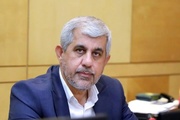
Kazem Gharibabadi, deputy foreign minister for legal and international affairs, told state television that Iran remains in a state of war. He said the strait had become a matter of Iran's national security and that basic changes in entry and exit routes were required.
He said that for the past 58 years ships had passed through Omani waters, causing severe damage to Iran. Under the new temporary arrangement, the entry lane into the Persian Gulf will run through Iranian waters, while the exit lane will pass through Omani territorial waters. In both directions, ships will transit through Iranian waters. The corridor will function like a two-way highway with a total width of about seven miles, he said.
Gharibabadi said the route was temporary, and that Iran and Oman must negotiate a permanent new route within 30 to 60 days to replace the previous maritime traffic scheme.
"From a military standpoint, the Strait of Hormuz is closed," he said. Under the understanding, no military vessels will be allowed to pass, and only commercial ships will be permitted to transit.
He dismissed claims by Donald Trump about demining the strait, saying no one but Iran knows the location of mines in the waterway. "If that claim were true, why is no vessel passing through the strait?" he asked.
Gharibabadi said the negotiations with Oman took place through a joint working group that included the foreign ministry, the ports and maritime organisation, the IRGC and its navy force, and the General Staff of the Armed Forces. He said the armed forces had presented the maps and all sides had consensus on them.
On possible talks with the United States, he said conditions had changed, and that any future negotiations would not be like the past. He also said Iran could carry out preemptive actions to defend its national security. "Why must we always wait for America to attack us so that we defend ourselves? If we do not see conditions as appropriate, why should we not take actions against American interests? These are now within the framework of the Islamic Republic's policy," he said.
Regarding Pakistan's army chief, who visited Tehran this week, Gharibabadi said, "We told him we do not trust America. It was not the Islamic Republic of Iran that violated the Islamabad MoU. America has not been honest in talks and has proven it does not abide by its commitments. If the Americans want nothing to happen in the Strait of Hormuz and want action toward its reopening, they must implement Iran's conditions in the agreement."
MNA













Your Comment